Who is in the room
Peers, invited one name at a time. In a legal room, in-house only. Supporters come one to a company. Nobody is there to sell. Invitees attend free.

Table Talk · the room we run most often
One subject, one room, and peers doing the talking. Sometimes behind a closed door, sometimes in front of an audience — and always with something worth staying for afterwards.
The engineFirst edition
One room
Peers, invited one name at a time. In a legal room, in-house only. Supporters come one to a company. Nobody is there to sell. Invitees attend free.
One question that is changing the work, put to the room by somebody in it. Chatham House rules, kept to time, no slides, nobody at the front. Then something worth staying for: coffee, or the evening the host does best.
Peers you’ll call for a second opinion, the evening, and a written account of what the room said, without names.
Sell in the room, name a session after a company, or hand a list to anybody.
Why Futr Keystone exists
The best conversation at any event happens after the agenda ends, once the titles drop and people just talk. We stopped treating that as a happy accident and built the whole thing around it, through experiences people remember and want to repeat. Three things follow from that.
A world-class room, built one name at a time, on the biggest change their industry has seen in a generation. Not a delegate list and not a headcount — the people whose decisions are the change.
Thought leadership filmed rather than written. Human moments rather than staged ones, and the pauses where somebody actually stops and thinks. Nobody forwards a webinar.
Work has always been won through relationships, and relationships come from the person, not the position. Get it right and they are still talking about it in ten years.
The two shapes
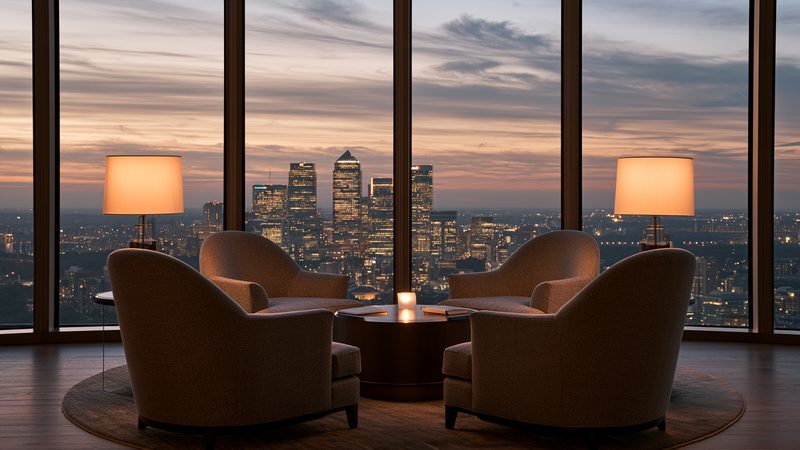
The closed room
Chatham House: what’s said stays, what you learn leaves with you. The room we run most often.
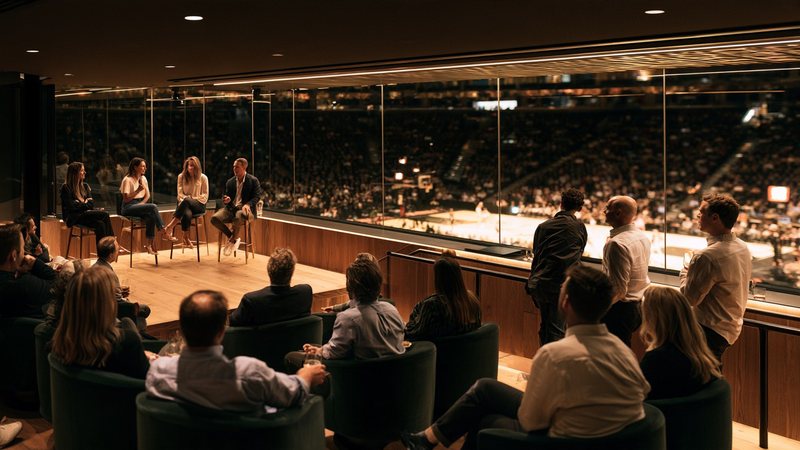
The open room
Built with a host — a university, an association, a venue, a business — for a room we couldn’t fill on our own. The panel is made up of peers. The audience is whoever the host brings, and we say so rather than pretend otherwise.
Why it works
Put the same person in a room with clients, with advisers, with a supplier, and they manage the conversation. Put them in a room with only their own kind, on one subject, and they stop managing it.
What comes out of the room afterwards is a written account — what the room was worried about, the language it used, the question nobody could answer. Non-attributed, always. That is what makes it worth having.
The morning
08:00
A private room. Nobody wears a badge and nobody is introduced by job title.
Peers only
08:30
One subject, put to the room by somebody in it. Chatham House rules: what is said stays, what you learn leaves with you.
Peers only
10:00
A chosen moderator keeps every minute on the conversation. Small enough that everybody is actually heard. Every seat is designed around a role in the business, so everybody is there to add a voice and value, and nobody arrives with a colleague to hide behind.
Peers only
10:30
A few of our partners come in for coffee. Same room, same table, nothing set up.
Everybody
Some rooms run as a working lunch instead. The session itself does not change: peers only, unrecorded by default. The fun is the point: it’s what turns a contact into a relationship.
The evening
A room that ends when the questions do is a webinar with chairs. Every Table Talk is built with something on the other side of it — sometimes just coffee and an hour nobody is rushing, sometimes the thing the host does better than anyone else.
A screening room, then the film and a drink. A stadium, then the game. A quiz, badly, with people who have spent the last hour being serious. The conversation earns the evening, and the evening is what makes the next invitation easy to accept.
What it is
Cost, artificial intelligence, insourcing, whatever is live at the time. In the closed room, run under the old Chatham House rule: no panel, no slides, no one at the front. What’s said in the room stays there; what you learn leaves with you.
Sessions are named by their subject, never by the seniority of the people invited. Some rooms are built for the top seat; others for the people five to ten years in who run the pilot and brief the advisers. Both are peer rooms, and they are worth different things.
The room takes different shapes depending on the group. Some are a short working lunch, where the conversation happens and everyone’s back at their desk within the hour. Others are built with a local business for the evening: the conversation happens first, then the room moves into whatever that host does best. Picture a discussion held somewhere built for it, a screening room say, followed by a themed evening to match: a quiz, cocktails, the kind of night people actually want an invitation to.
What doesn’t change whichever shape the room takes: the conversation itself stays peers only, unrecorded, off the record.
The series
A single Table Talk is complete on its own. The series is for when one conversation should become a network: the same people, coming back to the table as the questions change, with something added each time.
Listen. A guest from outside the industry opens the room: an economist, a government official, someone at the heart of the subject. They add weight and insight and spark the first questions. The room listens, asks and says what is on its mind.
Answer. The questions from the first room go to a panel of voices with real industry experience, who can speak to exactly what was raised.
Reflect. The room looks back at the first two: how the subject has changed their industry, role and business. Together you shape the subject for the next gathering and carry the relationships on in a relaxed setting.
Every room stands on its own. Come to one and nothing obliges you to come to the next. Guests from the first room are offered seats in the second and third first, and we only keep a guest list together from one room to the next with each guest’s agreement. The questions are published without names, and we return to them at the end.
A network you built rather than were handed, and a record of what you asked, what you were told and what actually happened.
Build one with us
Table Talk is built to fit different organisations rather than the other way round. Universities, associations, venues, businesses with an audience of their own — if you’ve people worth getting in a room and a reason to get them there, there’s a version of this we can do together.
You bring the room, the audience and whatever your organisation does better than anybody else. We bring the subject, the voices and the rules that keep it worth attending. Those don’t move for anyone we build with: no speaking slot, no say over who else is invited, no list afterwards.
The boundary
Supporters come one to a company, and that applies to the panel and to every closed room. In an open room the audience belongs to the host. What doesn’t move either way: nobody in front of the room is selling, no session is named after a company, and no list leaves the room.
In a Contest the game is the format. In a Table Talk the evening follows the conversation.
In short
Where it stands: the most frequent thing we run.
One ask, and only one
Tell us who you are and which subject you’d want the room to take on. There’s no fee — every seat is decided, not sold or signed up for, and that’s what keeps the room worth being in. A person reads every one.